


A Fender Bass Truss Rod That Just Spins
LikeCommentShare
Search the Hub or by author, or tap a filter to narrow the feed.

 Lite members only
Unlock video
Lite members only
Unlock video

 Lite members only
Unlock video
Lite members only
Unlock video

 Lite members only
Unlock video
Lite members only
Unlock video

 1 reply
 2 replies
 3 replies


 Lite members only
Unlock video
Lite members only
Unlock video

 4 replies
 1 reply

 1 reply
 2 replies

 Lite members only
Unlock video
Lite members only
Unlock video
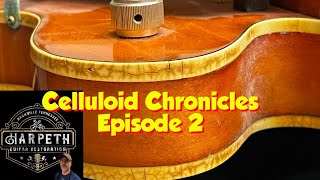
Someone came to me with an old Gretsch afflicted with binding rot. The cream binding was mostly intact, with some pitting and discoloration in various spots, and only a couple of pieces loose. The owner was aware that the only sure cure was the removal of the old binding, and then rebinding the guitar. They didn't want to invest that much money into a repair.
I rediscovered a StewMac video from 2017 called "Guitar repair using kitchen chemicals". In this video, Steve Uhrik (owner of RetroFret Vintage guitars in Brooklyn, NY) shares some tips he says he got from Joe Pecnik, who worked at the Metropolitan Museum of Art in the Department of Musical Instruments.
One tip shared was adding some sodium bisulfite (an antioxidant that can be used in food) to 2 part epoxy to patch rotted celluloid pickguards, and that this can help stop the deterioration from spreading.
I re-glued any loose binding, filled any deep pits with epoxy paste, and then very lightly painted the binding with the epoxy/sodium bisulfite using tiny micro brush applicators. I think it worked out very well, as all the hairline cracks in the binding were reinforced, and the binding sealed. It should not impede binding removal in the future, as the coating is on the outside only.
I also got some "Zerust Plastabs" (which are used to stop rusting) and stuck a couple in the case. I don't really know if this will have a beneficial effect on binding oxidation, but perhaps it will, and maybe it will keep the metal parts and frets from reacting.
